

Educational Article
The Certificate of Advanced Studies in Brain Health: An International Online Study Program at the University of Bern
by David Tanner1, Simon Jung1, Franka Theile1
¹Department of Neurology, Inselspital, University Hospital Bern, University of Bern, 3010 Bern, Switzerland
Cite as: Tanner, D., Jung., S. & Theile. F. (2026).The Certificate of Advanced Studies in Brain Health: An International Online Study program at the University of Bern, THE MIND Bulletin on Mind-Body Medicine Research, 10(2), 8-13. https://10.61936/themind/202603133
Abstract
Background: Brain health is increasingly recognized as a major public health priority. It is essential for well-being, creativity, productivity, and quality of life.
Methods: To address the growing need for specialized education in this field, the University of Bern developed the Certificate of Advanced Studies (CAS) in Brain Health, an international online study program.
Results: The CAS in Brain Health was successfully launched and enrolled more than 78 interdisciplinary participants from 25 countries across the first two cohorts.
Conclusion: The program aims to educate the next generation of professionals engaged in brain health prevention, promotion, and implementation.
Keywords: brain health, mental health, study program, education
Introduction
Brain health is a growing public health priority and extends beyond the treatment of neurological and mental disorders. It places a strong focus on disease prevention and the promotion of cognitive and mental well-being.
The World Health Organization (2022) defines brain health as “the state of brain functioning across cognitive, sensory, social-emotional, behavioral and motor domains, allowing a person to realize their full potential over their life course, irrespective of the presence or absence of disorders”.
In response to the increasing need for specialized education in this field, the University of Bern developed the Certificate of Advanced Studies (CAS) in Brain Health, an international online study program.
CAS in Brain Health
The CAS in Brain Health at the University of Bern is the first study program dedicated exclusively to brain health. Developed in collaboration with the European Academy of Neurology (EAN), the program follows a multidisciplinary and interprofessional approach and is structured into four modules (Jung, Tanner, Reis, & Bassetti, 2025):
Module 1: Introduction to Brain Health
The module introduces the concept of brain health and covers topics such as brain anatomy, neurophysiology, brain–body interactions, and broader frameworks including the exposome and One Health.
Module 2: Brain disorders
The module provides an overview of common neurological, mental, and behavioral disorders, including stroke, dementia, Parkinson’s disease, depression, and anxiety.
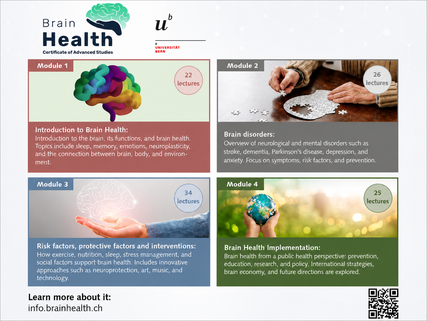
Fig. 1. The four modules of the CAS in Brain Health
Module 3: Risk factors, protective factors and interventions
The module comprehensively explores risk and protective factors influencing brain health across the lifespan, including physical activity, nutrition, sleep, social connection, mindfulness, and cognitive stimulation. It further examines evidence-based interventions and strategies for brain health promotion and disease prevention.
Module 4: Brain Health Implementation
The module focuses on the implementation of brain health strategies at individual and societal levels, including public health approaches, prevention initiatives, policy development, and advocacy.
The four modules comprise more than 100 topics delivered through a combination of live online sessions and pre-recorded lectures by internationally renowned speakers. The initial participant feedback was highly favorable, with average module ratings from 4.53 to 4.78 out of 5.
The program offers flexible and convenient online studying on an interactive learning platform accessible from anywhere in the world. The first cohort included 37 participants from 16 countries, while the current cohort comprises 41 participants from 20 countries. An optional two-day on-site event in Bern further promotes personal interaction, networking, and learning among participants and faculty.
Conclusion
The interdisciplinary and international structure of the program reflects the broad and evolving nature of brain health, spanning neurology, psychiatry, psychology, mind–body medicine, and public health. By combining flexible online learning with interactive teaching and practical implementation strategies, the program aims to translate brain health knowledge into clinical practice, public health, and prevention initiatives. Given the increasing global focus on brain health, prevention, and healthy ageing, specialized educational programs in this field are likely to become increasingly important. Future evaluations will assess participant experiences, professional impact, and the implementation of brain health initiatives across healthcare and societal settings.
Overall, the CAS in Brain Health addresses the growing need for structured and evidence-based education in brain health. By bringing together international expertise and participants from diverse professional backgrounds, the program aims to contribute to the development of future leaders and advocates in brain health.
Author Contributions: Conceptualization, D.T., S.J., and F.T..; writing—review and editing,
D.T., S.J.,. and F.T.; All authors have read and agreed to this version of the manuscript.
Funding: This research received no external funding.
Institutional Review Board Statement: No ethical approval required
Informed Consent Statement: Not applicable.
Data Availability Statement: All date is contained within the manuscript.
Conflicts of Interest: The authors are the initiators and creators of the CAS in Brain Health and are therefore potentially biased with regard to this topic.
References
Jung, S., Tanner, D., Reis, J., & Bassetti, C. L. (2025). The Certificate of Advanced Studies in Brain Health of the University of Bern. Clinical and Translational Neuroscience, 9(3), 35. doi:10.3390/ctn9030035
World Health Organization. (2022). Optimizing brain health across the life course: WHO position paper. World Health Organization.